
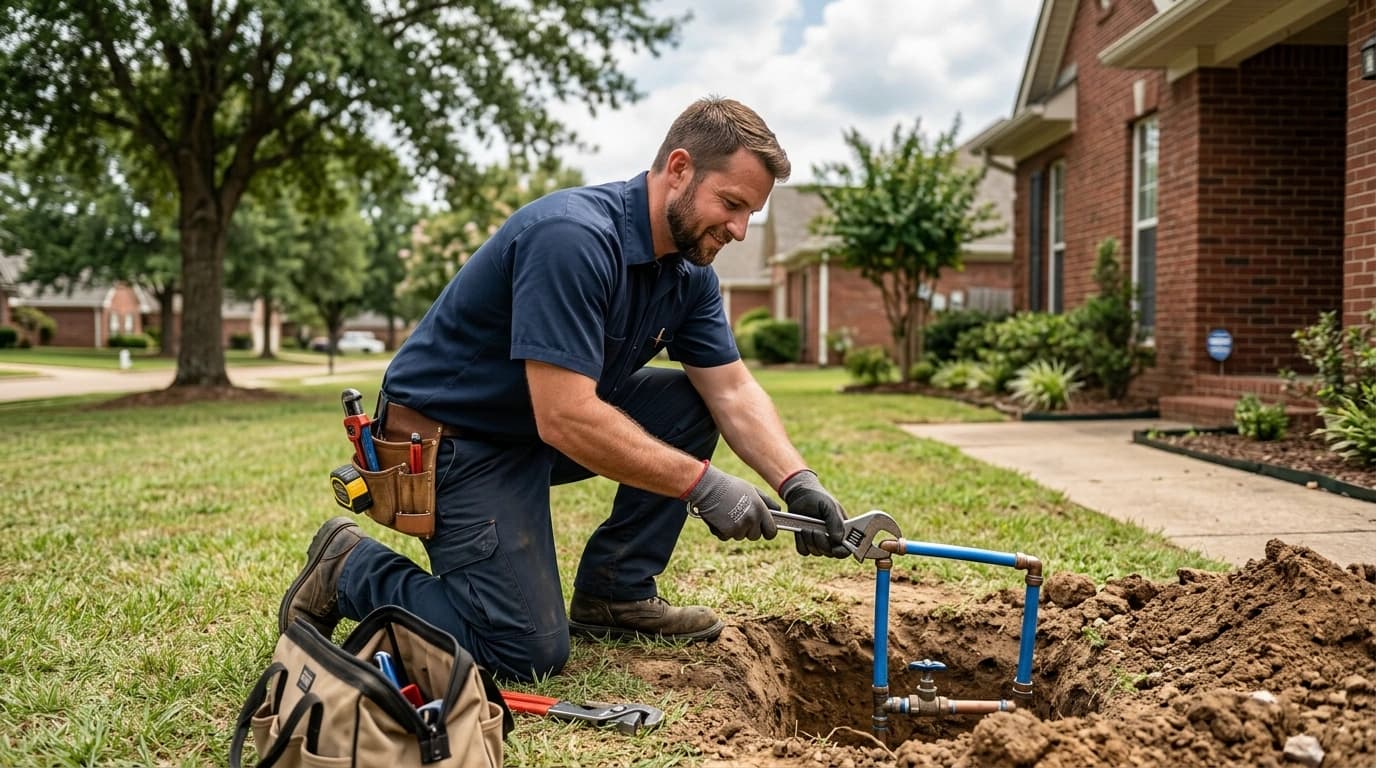
Water Line Services in Tupelo, MS
Repair and replacement of the buried line from the street to your home.
The water line is the buried pipe that carries water from the street or meter to the house — separate from the plumbing inside the home. When it fails, the symptoms can look like an interior plumbing problem at first.
Signs the Water Line May Be the Problem
- A drop in water pressure affecting the entire house
- A consistently wet or unusually green patch of yard along the line's path
- A water bill that's risen with no leak found inside the home
- The sound of running water near where the line enters the property
What Can Cause an Underground Water Line Problem
- Pipe age and material — older pipe materials can deteriorate or corrode over time
- Ground shifting — soil movement can stress or shift a buried line
- Tree root intrusion — roots can work into a line through an existing crack or joint, where conditions allow
- Corrosion — depending on the pipe material and soil conditions
Water Line Repair vs. Replacement
The right solution depends on where the failure is, the condition of the pipe, how extensive the damage is, and the pipe material. A single, localized failure can often be repaired directly at that section. More extensive damage, or a line showing problems in multiple places, may call for full or partial replacement. A failed water line doesn't automatically mean the entire line needs replacing — that's determined by what's actually found once the line is evaluated.
How a Water Line Problem Is Diagnosed
Diagnosis generally starts with the symptoms, then checking accessible interior plumbing to help determine whether the issue is inside the home or in the buried line itself. From there, the affected section is located, the pipe's condition is evaluated, and the appropriate repair or replacement scope is determined based on what's found.
Underground Water Line vs. Interior Leak vs. Slab Leak
A water line problem can affect water pressure throughout the home and may show up as unexplained moisture or other signs outdoors — a wet yard, running water sounds near where the line enters the property, or pressure loss throughout the whole house. An interior leak tends to be more localized, affecting one fixture or area rather than the entire home. A slab leak involves plumbing beneath or associated with the home's foundation and may produce different signs depending on where the leak occurs. Symptoms alone don't always identify the exact source — see Leak Detection if it's not clear which of these applies.
Water Line Repair and Replacement Process
- Evaluate the symptoms and the water line itself
- Locate the affected section
- Determine the pipe's condition and the appropriate scope
- Choose a repair or replacement approach suited to the situation
- Access the affected line
- Complete the repair or replacement
- Test the system afterward to confirm pressure and connections
Does the Yard Have to Be Dug Up?
Not always. Depending on the location and extent of the problem, some water line repairs can be done with trenchless methods, where the situation and access allow for it. Whether that's an option for a specific line is determined during the evaluation.
Frequently Asked Questions
What is a residential water line?+−
The buried pipe that carries water from the street or meter to the house, separate from the plumbing inside the home.
How do I know if my water line is leaking?+−
A whole-house pressure drop, a wet or unusually green patch of yard along the line's path, or a rising water bill with no interior leak found are the clearest signs.
How do I tell whether the problem is the water line or indoor plumbing?+−
Water line problems tend to affect the whole house and show up outdoors; interior leaks are usually more localized to one area. An evaluation, or leak detection, can confirm which applies.
What causes underground water lines to fail?+−
Pipe age and material, ground shifting, tree root intrusion, and corrosion are the most common contributing factors.
Does a water line always need to be replaced?+−
No — a localized failure can often be repaired directly. More extensive or widespread damage is what tends to call for replacement.
Can a water line be repaired instead of replaced?+−
Yes, when the damage is localized to one section rather than affecting the line more broadly.
Does the yard have to be excavated?+−
Not always — trenchless methods may apply depending on the location and extent of the problem.
What is trenchless water line repair?+−
A method of repairing or replacing a water line without fully excavating the yard, where the situation and access allow for it.
How is an underground water line problem diagnosed?+−
By reviewing the symptoms, checking accessible interior plumbing to help narrow down the source, then locating and evaluating the affected section of the line.