
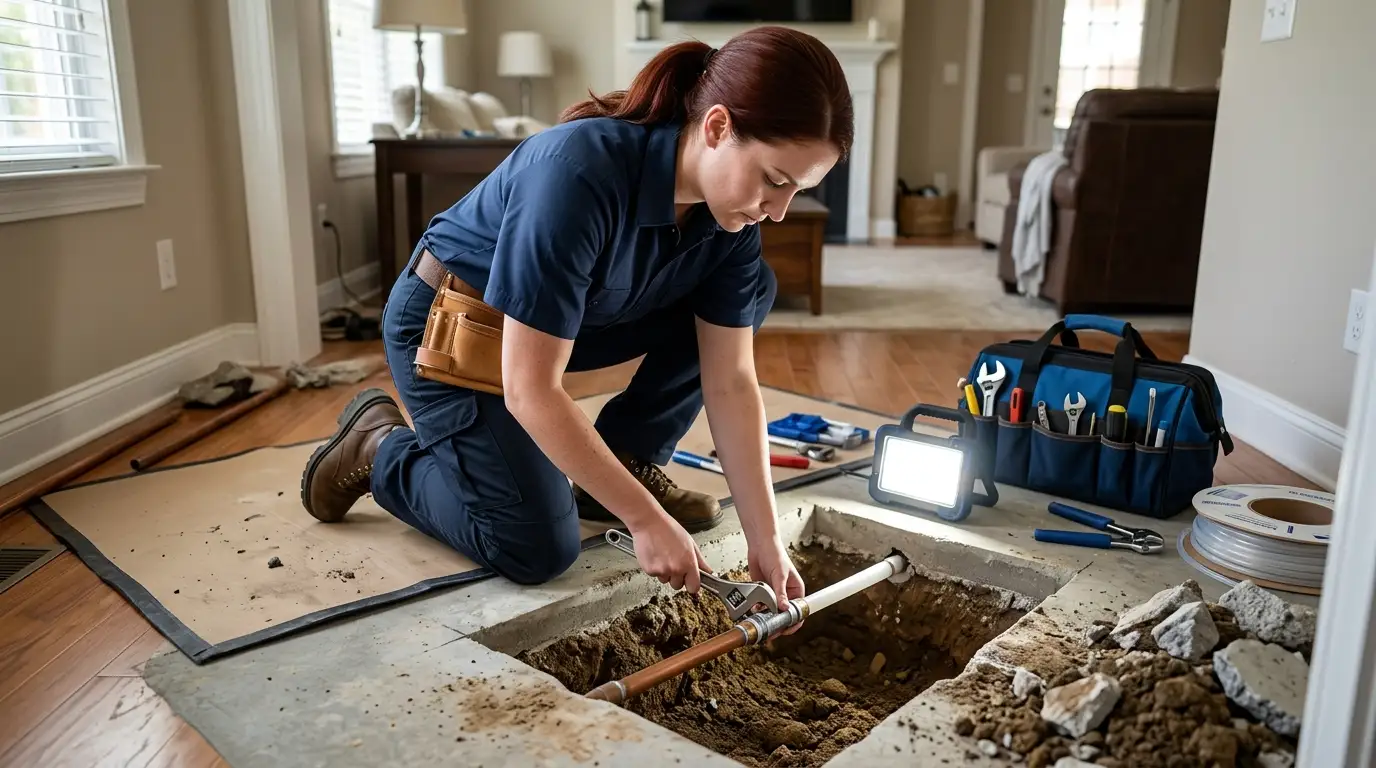
Slab Leak Repair in Tupelo, MS
Repairing leaks beneath or associated with a concrete foundation.
A slab leak generally refers to a leak in plumbing located beneath or associated with a home's concrete slab foundation. Because the pipe is inaccessible without specialized detection, slab leaks tend to go unnoticed longer than other leaks — and they're often confused with foundation problems.
Signs of a Slab Leak
- A warm or noticeably damp spot on an otherwise cool floor
- The sound of running water near the foundation with no fixture in use
- An unexplained increase in water usage
- Reduced water pressure that developed gradually
- Persistent moisture or water appearing near the slab edge
No single symptom on its own confirms a slab leak — these can be signs worth having looked at, particularly in combination or without another obvious explanation.
What Causes Slab Leaks
- Pipe deterioration or corrosion over time, depending on the pipe material and condition
- Damaged connections or joints beneath the slab
- Ground shifting or movement placing stress on the piping
- Pressure-related stress on a section of line
- General age and material-related deterioration
How a Slab Leak Is Diagnosed
Diagnosis typically starts the same way leak detection does more broadly — reviewing symptoms, checking accessible plumbing, and narrowing down the likely location before deciding on a repair approach. See Leak Detection for more on how that process works. Once a leak is confirmed to be under or associated with the slab, the next step is figuring out the right repair approach for that specific location and pipe condition.
Slab Leak Repair Options
The right approach depends on the location and condition of the affected line. Depending on the situation, repair may involve accessing the affected area through the slab to repair or replace that section directly, or rerouting the affected water line above the slab instead, where the layout and situation allow for it. Neither approach is automatically the right call for every slab leak — the specific location, extent of damage, and plumbing layout determine which makes more sense.
Does the Slab Always Need to Be Opened?
Not every slab leak requires the same repair approach. Depending on where the leak is located, the condition of the piping, and the layout of the plumbing system, repair may involve accessing the affected section directly or considering an alternate routing approach that avoids opening the slab at all. Which option applies is confirmed once the leak's location and the surrounding plumbing are actually assessed.
Slab Leak vs. Foundation Problem — How to Tell Them Apart
A slab leak is a plumbing problem — a pipe under the slab has failed. A foundation problem is a structural issue with the slab or footing itself, which needs a foundation repair specialist instead. Water-related symptoms can point toward a plumbing leak, while cracking or structural movement without accompanying water symptoms may warrant evaluation by a foundation specialist. When the signs overlap, professional assessment is needed to determine the cause.
Is a Slab Leak an Emergency?
Not always as urgent as a burst pipe, but it shouldn't be ignored — left unaddressed, it can lead to water damage, mold, and higher water bills over time. A slab leak that's actively causing significant water intrusion is worth treating with more urgency; see Emergency Plumbing if water is actively flooding or spreading.
What Happens After a Slab Leak Is Located
Once the leak's location and the affected pipe's condition are confirmed, the repair options are evaluated against that specific situation — direct access and repair, or rerouting above the slab — and the appropriate approach is carried out. After the repair, the affected plumbing can be checked to verify that the leak has been addressed and the system is functioning as expected.
Frequently Asked Questions
What is a slab leak?+−
A leak in plumbing located beneath or associated with a home's concrete slab foundation.
What are the signs of a slab leak?+−
A warm or damp spot on the floor, the sound of running water near the foundation, an unexplained rise in water usage, or gradually reduced water pressure.
How is a slab leak diagnosed?+−
The process starts with reviewing symptoms and checking accessible plumbing, similar to leak detection generally, before narrowing down the leak's specific location beneath or near the slab.
Does a slab leak always require breaking the concrete?+−
Not always — depending on the leak's location and the plumbing layout, rerouting the affected line above the slab can sometimes avoid opening the slab at all.
Can a slab leak be repaired without opening the slab?+−
In some situations, yes, by rerouting the affected water line above the slab instead of accessing it directly — whether that's an option depends on the specific leak and layout.
How serious is a slab leak?+−
It's not always as urgent as a burst pipe, but it shouldn't be ignored — left unaddressed, it can lead to water damage, mold, and rising water bills over time.
Is a slab leak an emergency?+−
Not usually as urgent as a burst pipe, but it's worth prompt attention. If water is actively flooding or spreading, treat it as an emergency.
How do I know if it's a slab leak or a foundation problem?+−
Water-related symptoms point toward a plumbing leak; structural symptoms like cracking or movement with no water signs point toward a foundation issue instead.
What happens after a slab leak is located?+−
The repair options are evaluated based on the leak's specific location and the pipe's condition, the appropriate repair is carried out, and the surrounding plumbing is checked afterward to confirm the issue is resolved.