
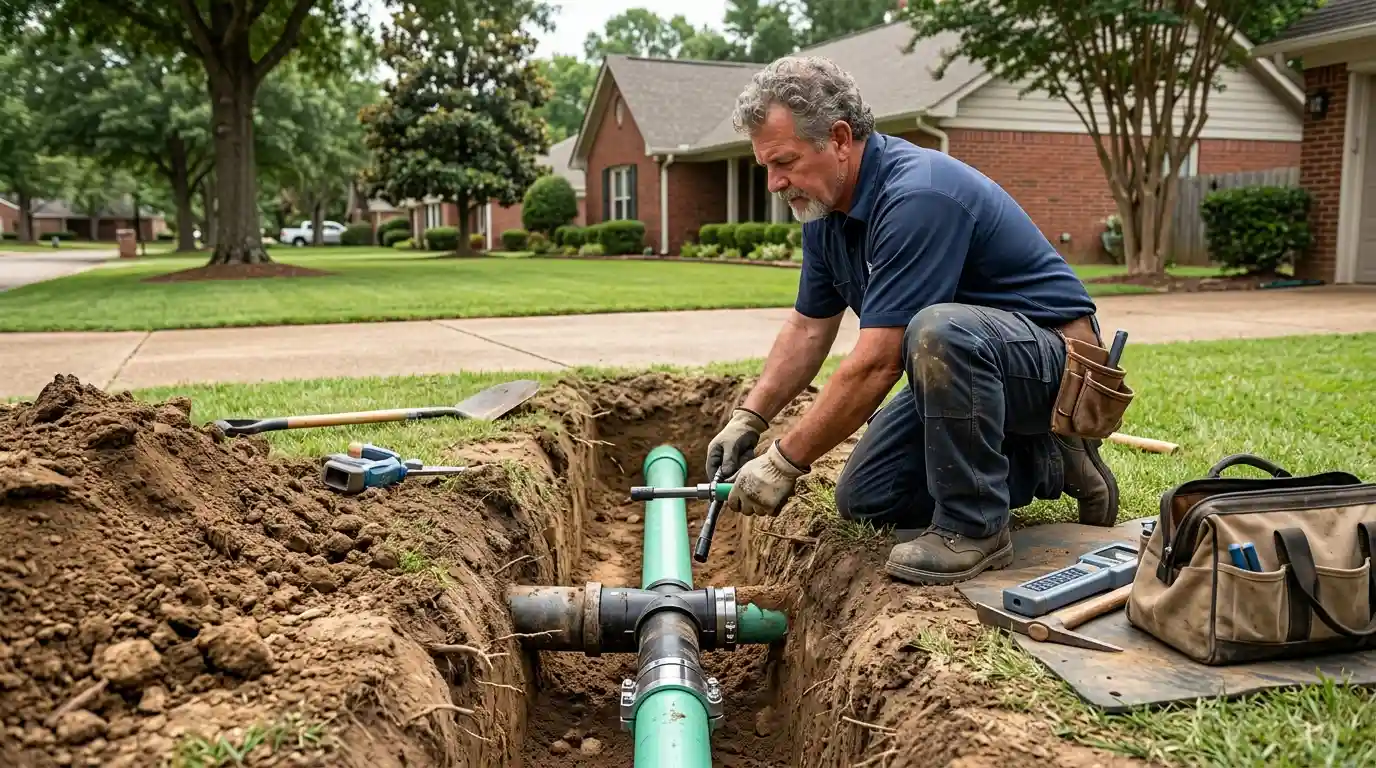
Sewer Line Repair in Tupelo, MS
Repairing damaged or failing main sewer lines in Tupelo, from localized problems to partial or full replacement when the line's condition requires it.
When more than one drain backs up at once, or the same sewage backup keeps happening no matter how many times a single clog gets cleared, the problem is often the main sewer line itself.
Signs of a Sewer Line Problem
- Multiple fixtures backing up or draining slowly at the same time
- Sewage odor in the yard or near the foundation
- An unusually green or soggy patch of lawn, often over the line's path
- Gurgling sounds from drains when other fixtures are used
- A toilet that bubbles or backs up when a washing machine drains
What Causes Sewer Line Problems
- Tree root intrusion — roots are drawn to the moisture inside a sewer line and can work their way in through small cracks or joints
- Age and material — older clay or cast-iron lines are more prone to cracking, shifting, or corroding over time than modern materials
- Ground movement — soil that expands and contracts with wet and dry seasons can gradually shift or stress a buried line
- Grease and debris buildup — a heavier version of what causes drain clogs, but along the main line rather than a single fixture's drain
Repair vs. Replacement
A localized issue — a root intrusion at one joint, or a single cracked section — can often be repaired directly without touching the rest of the line. More extensive damage, especially along an older line showing multiple problem areas, may call for full or partial replacement. Trenchless sewer repair is one method worth knowing about: it repairs or replaces a line without fully excavating the yard, where the situation allows.
Getting an Accurate Diagnosis First
A sewer camera inspection is the most direct way to see exactly what's happening inside the line and determine the right level of repair — rather than guessing based on symptoms alone and potentially digging in the wrong spot. If sewage is actively backing up into the home or creating an immediate sanitation risk, that's an emergency — see Emergency Plumbing rather than waiting for a scheduled inspection.
What to Expect From Sewer Line Repair
The process typically starts with a camera inspection to locate and assess the problem, followed by a decision on the right repair method based on what's actually found — a spot repair, a trenchless lining or bursting method, or a full dig-and-replace if the line's condition calls for it. The specific approach depends on where the problem is, how extensive it is, and what's accessible at that location.
Frequently Asked Questions
How do I know if it's a sewer line problem and not just a clog?+−
Multiple fixtures backing up at once, recurring backups, or signs like yard odors and soggy patches point toward the main line.
What's the difference between sewer line repair and replacement?+−
Repair addresses a localized issue; replacement is for more extensive damage along the line's length.
What is trenchless sewer repair?+−
A method of repairing or replacing a sewer line without fully excavating the yard, when the situation allows.
Can hydro jetting fix a sewer line problem instead of repair?+−
Sometimes — if the issue is buildup or roots rather than structural damage.
What causes tree roots to get into a sewer line?+−
Roots are drawn to the moisture inside the line and can work their way in through small existing cracks or joints, then grow and worsen the opening.
Does my whole yard need to be dug up to fix a sewer line?+−
Not always — trenchless methods can repair or replace a line in many situations without full excavation.
How is a sewer line problem actually diagnosed?+−
A sewer camera inspection allows the plumber to see the inside of the line directly and identify visible problems before deciding on the appropriate repair.