
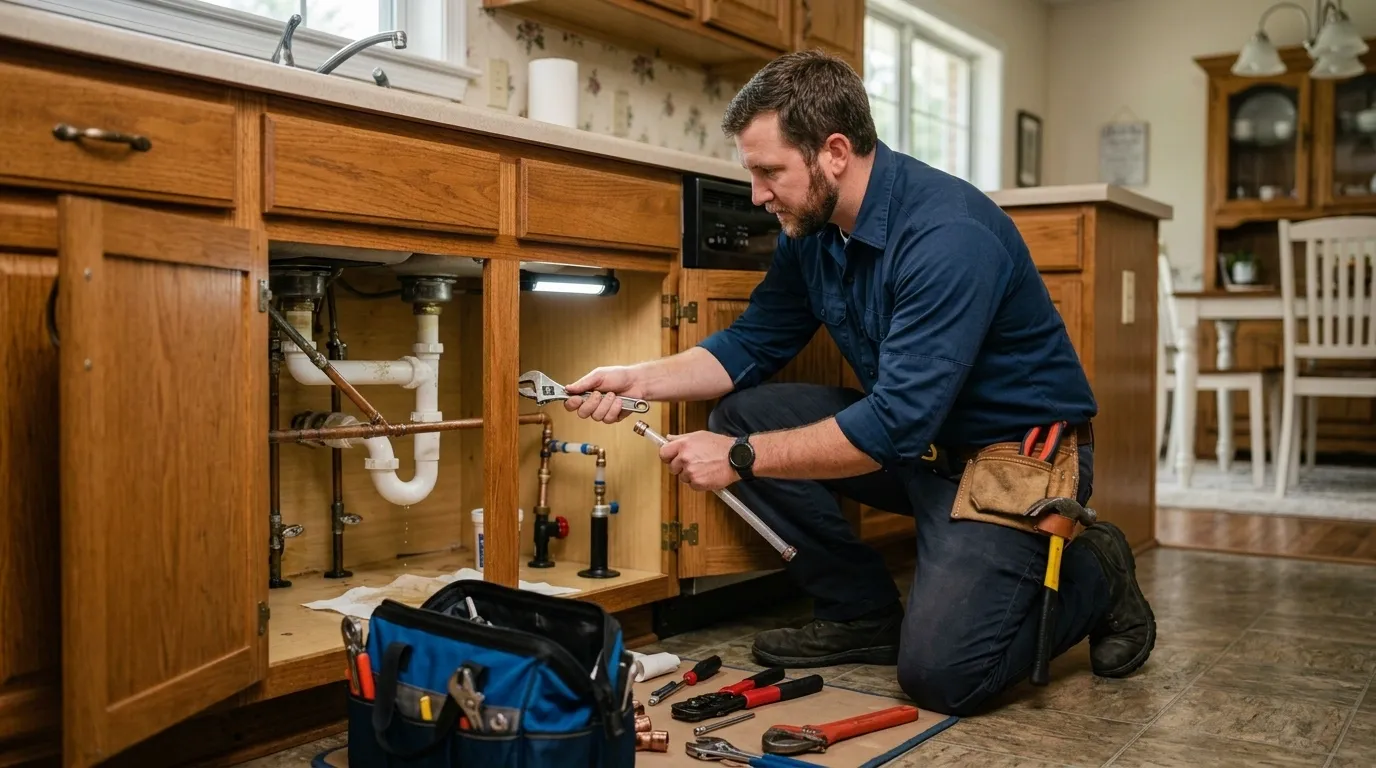
Plumbing Repair in Tupelo, MS
Everyday repairs for homes and businesses throughout Tupelo and the surrounding area.
Not every plumbing problem is an emergency, and not every problem needs a specialized service. A running toilet, a dripping faucet, a slow leak under a sink, or a valve that's stuck — these are the everyday repairs most homes need at some point, and most are straightforward to diagnose and fix.
Is This an Emergency?
If water is actively flooding, a pipe has burst, or sewage is backing up, that's an emergency — see Emergency Plumbing instead. Most other plumbing issues can be scheduled as a standard repair.
Common Plumbing Repairs
- Running or leaking toilets — usually a worn flapper, fill valve, or flush mechanism, often an inexpensive part-level fix
- Dripping faucets — typically a worn washer, cartridge, or O-ring that wears out gradually with normal use
- Minor leaks under sinks or at fittings — loose connections or worn seals, sometimes just a matter of tightening or resealing a joint
- Slow or stuck shut-off valves — common in older homes where a valve hasn't been operated in years and has partially seized
- Inconsistent water flow at a single fixture — often a clogged aerator, a partially closed valve, or a fixture-specific blockage rather than a whole-house issue
- Running water sounds with no fixture in use — can be a stuck fill valve, a small leak, or a fixture cycling on its own
What Plumbing Repair Covers
Plumbing repair is the general category for issues that don't fall neatly into a more specific service — not every problem is a drain clog, a water heater issue, or a fixture replacement. If something in the house's plumbing isn't working the way it should and it's not clear which specific service applies, that's exactly what a general repair call is for. A plumber can identify the actual cause during the visit rather than requiring a precise diagnosis beforehand.
Repair or Replace?
Most everyday plumbing issues are repairable — a worn part gets replaced, a loose connection gets resealed, a stuck valve gets freed or swapped. Replacement becomes the better option when a fixture or component has failed in multiple ways, is old enough that replacement parts are hard to source, or when the cost of repeated repairs starts to approach the cost of simply replacing it. An in-person look is the most reliable way to know which applies to a specific situation.
Not Sure What's Wrong?
Some problems point toward a more specific service: clogged or slow drains, no hot water or water heater issues, a specific fixture needing repair, or a leak you can't locate. If it's not clear which category fits, that's a normal thing to describe over the phone — describing the symptoms is enough to get started.
Frequently Asked Questions
What's the difference between a plumbing repair and an emergency?+−
An emergency is active, worsening damage — a burst pipe, major leak, or sewage backup. A repair is something that needs fixing but can be scheduled.
What are the most common plumbing repairs?+−
Running toilets, dripping faucets, minor leaks at fittings, and stuck shut-off valves are among the most frequent.
I'm not sure what's wrong — how do I know who to call?+−
Describing the symptoms is enough to start — a specific diagnosis doesn't need to happen before calling.
Is it cheaper to repair or replace a fixture?+−
Usually repair, for an otherwise sound fixture with a single worn part. Replacement tends to make more sense once a fixture has failed in multiple ways or parts are hard to find.
How long does a typical plumbing repair take?+−
Most everyday repairs — a running toilet, a dripping faucet, a stuck valve — are completed in a single visit.
Do I need to know exactly what's wrong before calling?+−
No — describing the symptoms is enough. The specific cause gets identified during the visit.