
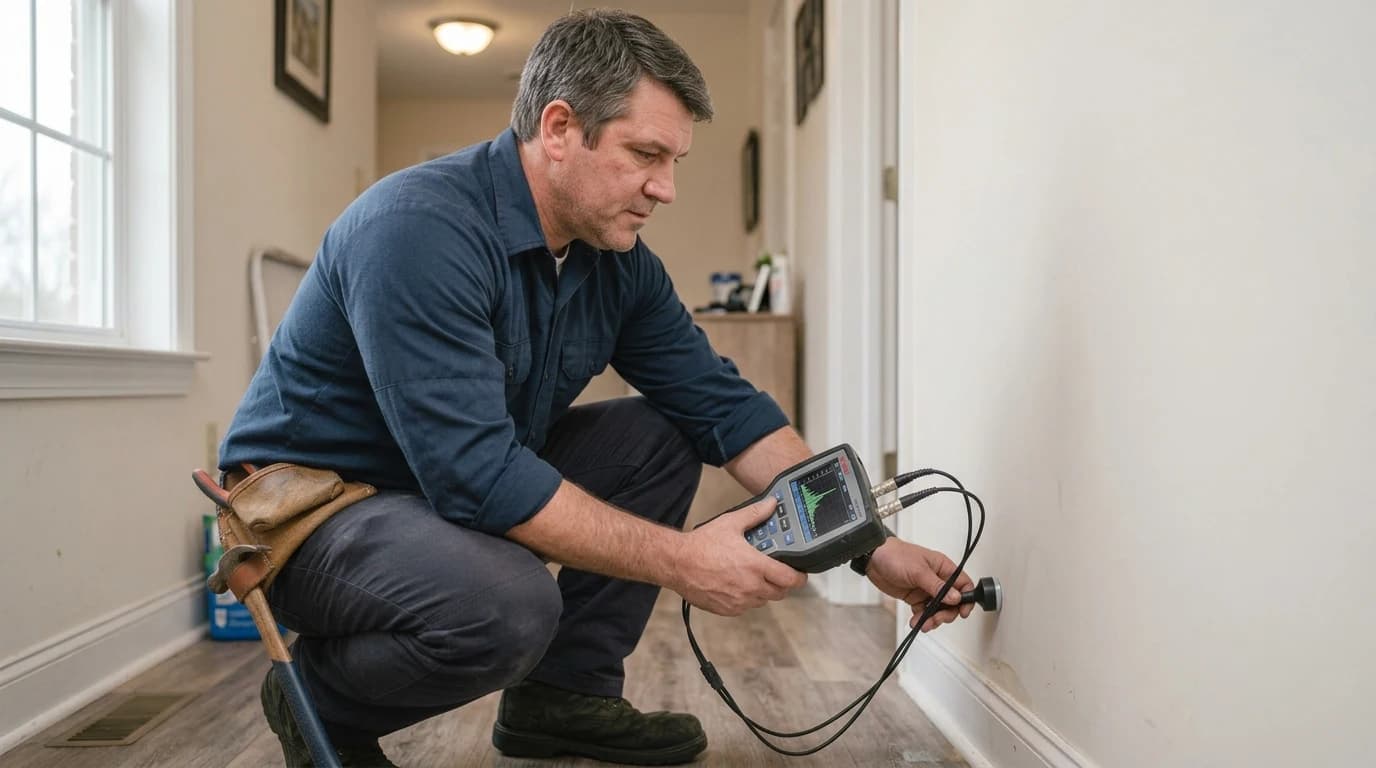
Leak Detection in Tupelo, MS
Finding hidden leaks before they cause more damage.
Not every leak announces itself with a puddle. Some show up as a water bill that's crept up for no clear reason, a damp spot with no obvious source, or the sound of water running when every fixture is off. Leak detection finds where the water is actually going before the damage gets worse.
Signs You May Have a Hidden Leak
- An increase in water usage with no change in habits
- The sound of running water when nothing is turned on
- A damp or discolored spot on a wall, ceiling, or floor
- A consistently damp area in the yard with no clear cause
- Low water pressure that developed gradually
What Leak Detection Does
Leak detection is about locating the source of a hidden or hard-to-trace leak, rather than repairing a leak that's already visible. A dripping faucet or a leaking fitting under a sink is usually a straightforward plumbing repair — leak detection is for the cases where something's clearly wrong, but it isn't obvious where the water is actually coming from.
How Leak Detection Works
- Reviewing the symptoms and where water or its effects are showing up
- Checking accessible plumbing and fixtures first to rule out the obvious
- Narrowing down the suspected leak location based on what's been found so far
- Using appropriate detection methods for the situation to pinpoint the source
- Identifying the likely source and the area affected
- Recommending the appropriate repair based on what's actually found
Where Hidden Leaks Can Occur
- Inside walls, behind fixtures or supply lines
- Beneath floors, including slab leaks under a concrete foundation
- In the underground water line between the street or meter and the house
- At concealed supply pipe connections not visible without investigation
- Around fixture connections that aren't actively dripping but are seeping slowly
Could It Be a Slab Leak?
If the suspected leak is under the concrete slab or foundation — which can sometimes be associated with a warm spot on the floor, or the sound of running water near the foundation — that's a specific situation with its own considerations. Leak detection finds where a hidden leak is occurring; slab leak repair addresses a leak that's been located beneath or associated with the foundation. See Slab Leak Repair for that distinction in more detail.
When Should You Consider Leak Detection?
- The source of dampness or moisture isn't obvious
- Water usage has increased without a clear reason
- Running water sounds continue with everything turned off
- A wall, floor, or ceiling keeps becoming damp despite no visible cause
- Water pressure has changed gradually with no obvious plumbing event behind it
- An underground or concealed leak is suspected but hasn't been confirmed
What Happens After a Leak Is Located?
What happens next depends entirely on what's found. A leak at an accessible fitting or connection is often a straightforward repair. A leak under a slab points toward slab leak repair. A leak in an underground supply line may call for water line service, depending on where the leak is located and what the inspection finds. And if leak detection turns up more than one leak, or the pipe material itself looks like the underlying issue, that's a sign worth evaluating the home's piping more broadly — see Repiping for what that conversation looks like.
Frequently Asked Questions
How do I know if I have a hidden leak?+−
An increase in water usage with no change in habits, the sound of running water with everything off, or unexplained damp spots can be signs of a hidden leak, particularly when they occur without an obvious plumbing cause.
What are the signs of a slab leak specifically?+−
A warm spot on the floor, sounds of running water near the foundation, or water pooling near the slab's edge.
How is a hidden leak found without tearing open walls?+−
Depending on the location and type of leak, appropriate detection methods can help narrow down where the leak is occurring before opening walls, floors, or other areas for repair.
Why did my water bill suddenly go up?+−
An unexplained increase in water usage can be a sign of a hidden leak, especially when your normal water-use habits haven't changed.
What's the difference between leak detection and slab leak repair?+−
Leak detection finds where a hidden leak is occurring. Slab leak repair addresses a leak that's been located beneath or associated with the foundation.
What happens if leak detection finds more than one leak?+−
Multiple leaks, or a pipe material that looks like the underlying issue, can be a sign the home's piping needs a broader evaluation rather than another individual repair — see Repiping.
Is leak detection the same as plumbing repair?+−
No — leak detection is the diagnostic step that finds where a leak is coming from. The repair itself, whether it's a fitting, a slab leak, or a water line, is a separate next step based on what's found.