
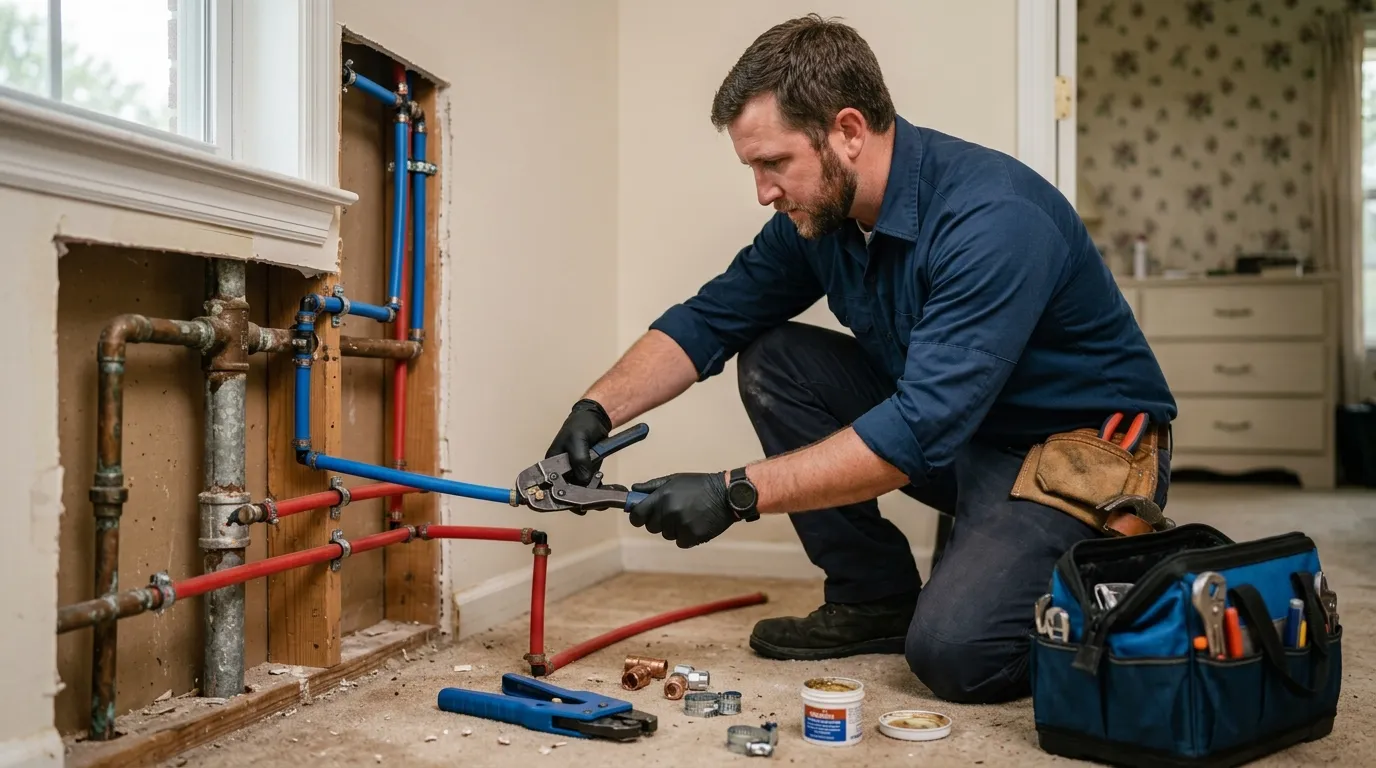
Repiping in Tupelo, MS
Replacing deteriorating supply piping throughout a home.
When a house has one leak, the fix is usually simple: repair that section of pipe. But when leaks keep showing up in different places, water pressure has been dropping, or the water itself looks discolored, the problem may not be limited to any single pipe — repeated issues can indicate that the existing piping is deteriorating or that broader replacement should be evaluated.
Signs It May Be Time to Repipe
- Leaks appearing in different locations over a short span of time
- Water pressure that's gradually dropped throughout the whole house
- Discolored or rust-colored water, particularly after the water's been off
- Older galvanized steel, aging copper, or polybutylene piping, particularly when combined with recurring leaks or other performance problems
Repiping vs. Repair
An isolated, single leak is usually a case for a standard repair — see Plumbing Repair. Repeated leaks showing up in different areas of the home over time are what starts to make repiping worth evaluating, since they can point toward the pipe material itself deteriorating rather than one unlucky fitting. Widespread deterioration across the system is where replacement tends to make more sense than continuing to chase individual repairs. A localized problem doesn't automatically mean the whole house needs repiping — that's exactly what an evaluation is for.
Partial Repiping vs. Whole-House Repiping
Repiping doesn't always mean replacing every pipe in the house. The actual scope can depend on the condition of the existing piping, how extensive the deterioration is, which areas are affected, accessibility, and any piping that's already been replaced in past work. Some homes genuinely need a full whole-house repipe; others may only need specific sections addressed. What applies to a given home is determined during an evaluation, not assumed upfront.
What a Repiping Evaluation Looks At
- The material of the existing piping
- The visible condition of accessible pipe sections
- History of repeated leaks and where they've occurred
- Water pressure patterns throughout the house
- Which fixtures or areas are affected
- How accessible the piping is for replacement work
- The overall extent of deterioration
Pipe Materials That Commonly Need Replacing
- Galvanized steel — can corrode internally over time, narrowing the pipe and affecting pressure
- Polybutylene — can become brittle with age and condition, increasing the risk of failure
- Aging copper — can develop pinhole leaks in multiple spots as it deteriorates
The Repiping Process
- Evaluate the existing piping's material, condition, and history
- Identify which sections of piping are affected and need replacement
- Determine the appropriate scope — partial or whole-house
- Plan access and routing for the new piping
- Replace the affected piping
- Test the system to confirm pressure and connections are working correctly
What Homeowners Should Expect
Access to walls, ceilings, or floors may be necessary depending on how the existing piping is routed and what the project's scope ends up being. Water service is typically interrupted for portions of the work while connections are made. How much disruption a project involves — and what's needed to restore access points afterward — depends heavily on the home's layout and the actual scope of the work, which is why these details get confirmed during the evaluation rather than promised in advance.
How Repiping Is Different From a Water Line Replacement
Repiping refers to the supply piping inside the home. The underground water line from the street or meter to the house is a separate matter — see Water Line Services for that distinction.
Frequently Asked Questions
How do I know if I need repiping?+−
Repeated leaks in different locations, gradually declining water pressure, or discolored water can be signs that broader piping replacement should be evaluated. An in-person evaluation helps determine whether repiping is actually appropriate.
Is repiping better than repairing repeated leaks?+−
It depends on the pattern — an isolated leak is usually a standard repair, while leaks recurring in different areas can point toward the pipe material itself needing replacement.
Does repiping mean replacing every pipe in the house?+−
Not necessarily — the scope depends on the condition and extent of deterioration, and can range from specific sections to a full whole-house repipe.
Can only part of a house be repiped?+−
In many cases, yes — partial repiping can be appropriate when deterioration is limited to specific areas rather than the whole system.
What pipe materials typically need to be replaced?+−
Galvanized steel and polybutylene are examples of piping that may warrant replacement depending on their condition; aging copper can also develop multiple leaks over time.
Is repiping the same as replacing my water line?+−
No — repiping is the supply piping inside the home. The underground water line between the street or meter and the house is a separate matter.
What happens during a repiping project?+−
The existing piping is evaluated, the appropriate scope is determined, the affected piping is replaced, and the system is tested afterward to confirm everything's working correctly.
Will walls or ceilings need to be opened?+−
Possibly, depending on how the existing piping is routed and the project's scope — this gets confirmed during the evaluation.
How do I find out if repiping is actually needed?+−
An in-person evaluation of the home's current piping — material, condition, leak history, and affected areas — is the right first step.