
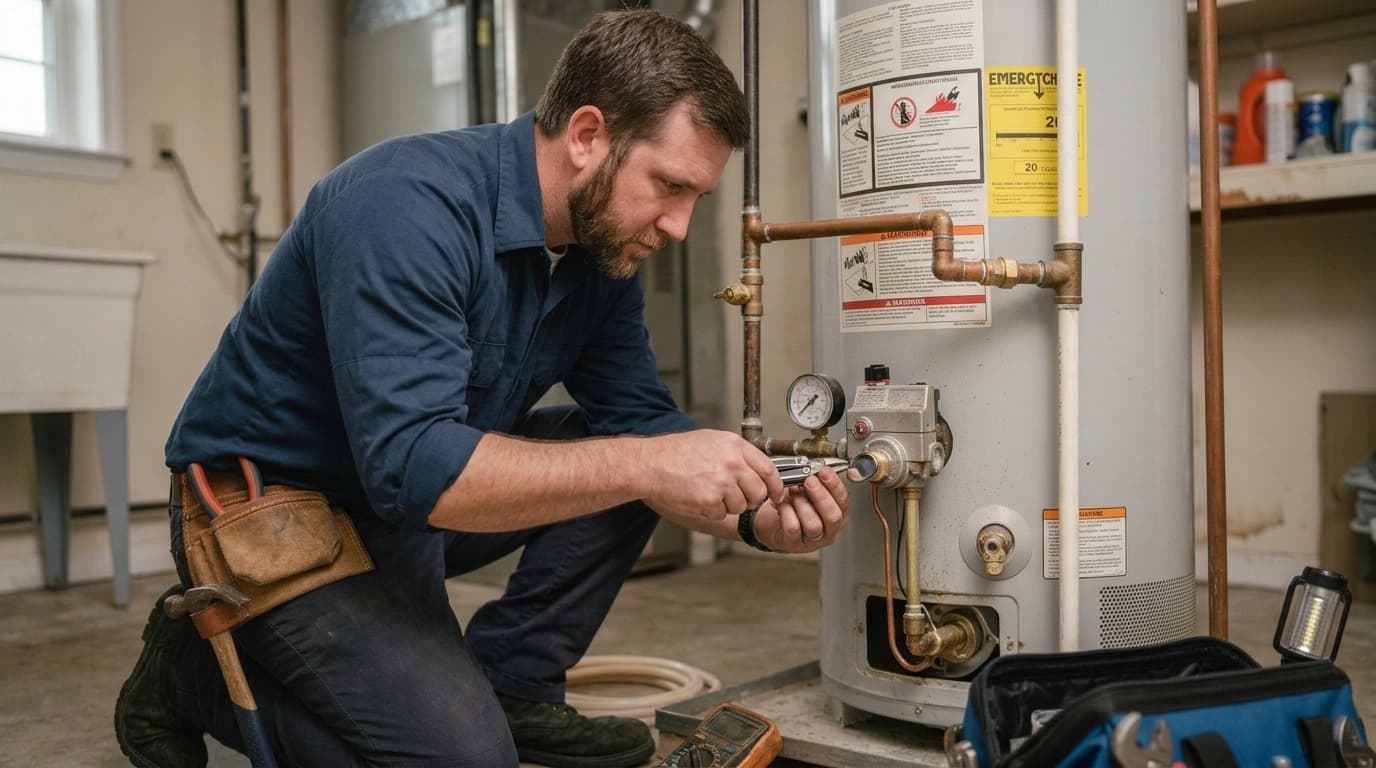
Water Heater Installation in Tupelo, MS
New water heater installation and replacement, sized and specced correctly.
Whether an old unit has failed beyond repair or a new build needs a water heater from scratch, installation involves more than swapping one unit for another — the right type, fuel source, and sizing all affect how well the new water heater actually performs for the household it serves.
When Replacement Makes More Sense Than Repair
A leaking tank, repeated failures, frequent repairs, or an aging unit can all be reasons to consider replacement. The right choice depends on the condition of the unit, what the repair would actually involve, and how much service life the unit likely has left — not simply its age on its own. See Water Heater Repair if the unit's current problem hasn't been diagnosed yet; a problem doesn't automatically mean replacement is the answer.
Signs Your Water Heater May Need Replacement
- The tank itself is leaking, rather than a fitting or connection
- The unit has needed repeated repairs
- Hot water has become increasingly unreliable
- Visible corrosion or deterioration on the tank or connections
- The unit no longer keeps up with the household's hot water demand
Choosing the Right Water Heater
Tank vs. Tankless
A tank water heater stores and continuously heats a reserve of hot water; a tankless unit heats water on demand as it flows through, with no standby tank. Which one fits better depends on household hot water demand, available utilities, installation space, and budget. Tankless units typically cost more upfront and can provide continuous hot water within the system's rated flow and capacity. See Tankless Water Heaters for a deeper look at that option specifically.
Gas vs. Electric
Selection is often largely determined by what utility connections are already available at the installation location, but it can also depend on electrical capacity, venting requirements for gas units, and the specific installation space. Switching fuel types — gas to electric or the reverse — isn't a simple one-for-one swap, since it can involve different connections, venting, or electrical requirements than the existing setup. The right fit for a given home is confirmed during the installation assessment rather than decided in the abstract.
Sizing
Correct sizing depends on household size, typical hot water usage, and peak demand — multiple showers running at once, along with appliances like a dishwasher or washing machine, is a different sizing situation than a single-occupant household. For a tank system, recovery capacity (how quickly the tank reheats after use) factors in alongside overall tank size. Getting sizing right matters for both comfort and the practical cost of the unit.
What Water Heater Installation Involves
- Assessing the existing setup or installation location
- Determining the appropriate water heater type and capacity for the household
- Checking available fuel and electrical connections
- Confirming installation requirements and compatibility with the space
- Removing the existing unit, when replacement is involved
- Installing and connecting the new water heater
- Checking connections and confirming the system is operating correctly
Why Professional Installation Matters
Correct installation isn't just connecting a new unit — it involves confirming compatibility with the home's existing plumbing and electrical or gas setup, proper venting where applicable, correct sizing for the household, and safe operation once everything's connected. Getting any of these wrong can affect how well the unit performs or how safely it operates, which is why installation is handled as an assessed job rather than a standardized swap.
Water Heater Replacement vs. New Installation
Replacement means swapping out an existing water heater that's failing, aging, or no longer the right fit for the household. New installation means putting in a water heater where one doesn't currently exist — most commonly as part of new construction or a larger remodeling project. See New Construction & Remodeling for how that's coordinated with a broader build or renovation timeline.
Factors That Affect the Right Installation
Beyond the unit itself, the installation location, existing plumbing configuration, available space, and how the new unit needs to connect into the home's current setup all factor into what a given installation actually involves. This is part of why an in-person assessment, rather than a decision made over the phone alone, is the most reliable way to confirm what's needed.
Frequently Asked Questions
When should I replace my water heater instead of repairing it?+−
An older unit with a major failure, or one needing repeated repairs, is often more cost-effective to replace — but the right call depends on the unit's actual condition.
What size water heater do I need?+−
Sizing depends on household size, hot water usage patterns, and how much simultaneous demand the household places on the system.
Should I choose gas or electric?+−
Largely determined by what utility connections are already available, though electrical capacity and venting requirements can also factor in.
What's the difference between a tank and tankless water heater?+−
A tank stores and continuously heats a reserve of water; a tankless unit heats water on demand with no standby tank. See Tankless Water Heaters for more detail.
Can an existing water heater be replaced with a different type?+−
Often, yes — switching between tank and tankless, or gas and electric, is possible depending on existing utilities, available space, and installation requirements, which get confirmed during an assessment.
Can a water heater be installed during a remodeling project?+−
Yes — new water heater installation is a normal part of new construction and remodeling work. See New Construction & Remodeling.
What should I consider before replacing my water heater?+−
Unit type, fuel source, sizing, available space, and installation requirements are the main factors — along with whether the current unit's issue is actually something that needs replacement at all.
How do I know if my water heater needs repair or replacement?+−
A leaking tank or repeated failures tend to point toward replacement, while a single component issue on an otherwise sound unit is often a repair. See Water Heater Repair for how that diagnosis is made.
How long does water heater installation take?+−
It varies depending on the existing setup, the type of unit being installed, access to the installation location, and whether any modifications are needed — a straightforward replacement is typically quicker than a new installation requiring new connections.